

As the final quarter of the year approaches, it’s the perfect time to review your business finances and make sure you’re on track to achieve your goals.
Whether you’re looking to improve cash flow, prepare for tax obligations or set budgets for the year ahead, taking a proactive approach now can make the final months of the year far less stressful.
Many business owners wait until year-end to review their finances, but planning ahead gives you the opportunity to identify potential issues early and make informed decisions before the year closes.
In this guide, we’ll share practical financial planning tips to help your business finish the year strongly and prepare for a successful start to the next.
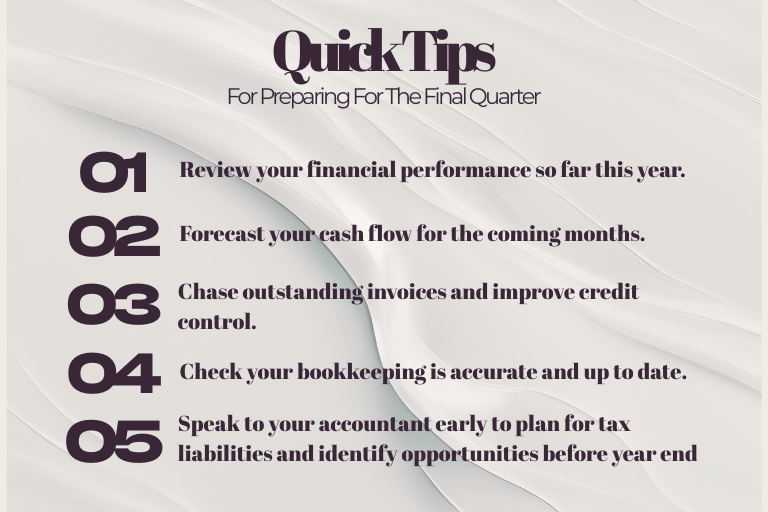
Before diving into the detail, here are five simple actions you can take to strengthen your financial position before the year draws to a close.
Taking these steps now can help you avoid unnecessary surprises and put your business in the strongest possible position for a successful finish to the year.
Before making any plans for the final quarter, it’s important to understand exactly where your business stands financially.
One of the most valuable tools for this is a set of Monthly Management Accounts. They can help you understand:
Alongside your monthly management accounts, it’s worth reviewing:
Together, these reports provide a clear picture of your financial health and allow you to make proactive decisions while there’s still time to influence your year-end results.
Cash flow is one of the most important factors in maintaining a healthy business.
Create a forecast for the final quarter by considering:
A clear cash flow forecast allows you to prepare for quieter periods and avoid unexpected shortfalls.
Unpaid invoices can have a significant impact on your cash flow, particularly as you approach the end of the year.
Take time to:
Improving your credit control can help ensure more cash is available when you need it most.
The final quarter is an excellent opportunity to assess your business spending.
Ask yourself:
Even small savings can have a positive impact on your year-end profitability.
Avoid last-minute surprises by reviewing your upcoming tax commitments well in advance.
Depending on your business, these may include:
Keeping accurate bookkeeping records throughout the year makes it much easier to estimate upcoming tax bills and set aside sufficient funds.
Reliable financial planning depends on accurate financial records.
Before the year gathers pace, ensure you’ve:
Up-to-date bookkeeping provides a clear picture of your business and supports better decision-making.
The final quarter isn’t just about finishing the current year. It’s also the ideal time to start planning for the next.
Things to consider might be:
Planning ahead allows you to enter the new year with confidence and a clear strategy.
Regular financial planning helps businesses:
Rather than reacting to financial challenges, planning ahead puts you in a stronger position to achieve your business goals.
Preparing for the final quarter can feel overwhelming, especially when you’re trying to balance day-to-day operations with planning for the future.
A proactive accountant can help you:
At Pristine Accounts, we provide proactive bookkeeping, accountancy and financial planning support for businesses across the UK.
Reviewing your finances before the final quarter allows you to identify cash flow issues, prepare for tax liabilities and make informed decisions before the end of the financial year.
Key reports include your Profit and Loss Statement, Balance Sheet, Cash Flow Report and Management Accounts.
Chasing overdue invoices, monitoring expenses, forecasting cash flow and keeping bookkeeping up to date can all help.
Yes. The final quarter is an excellent time to review goals, prepare budgets and identify investment opportunities.
Pristine Accounts can streamline bookkeeping, provide real-time financial insights and help keep records accurate and HMRC compliant.
Preparing for the final quarter is about more than simply closing the books. It’s an opportunity to review your business performance, strengthen cash flow and lay the foundations for future growth.
With accurate bookkeeping and expert financial advice, you can approach the end of the year with confidence and start the next one in the strongest possible position.
Contact us today to find out how we can help you prepare for a successful final quarter and beyond.